
At the beginning of this decade, US bond markets operated under extraordinary monetary accommodation. The period, which economists refer to as ZIRP (zero interest rate policy), created market conditions that drove yields on Treasury inflation-protected securities into negative territory. As for today, those negative yields seem like a relic of the past, as inflation-protected yields have swung well into positive territory. Investors have radically repriced the real cost of money.
Traditional “crowding out” describes periods when heavy government borrowing drives up interest rates and displaces private investment. Today, markets may be experiencing an opposite phenomenon, a condition of “reverse crowding out”. Hyperscalers such as Amazon, Alphabet, Meta, and Oracle are competing aggressively for fixed-income capital to finance the AI infrastructure expansion. Nine major technology companies are projected to raise debt reaching into the trillions by 2030, according to estimates by the OECD. As a result, investors may be selling US Treasuries to accommodate these higher-yielding corporate bonds. Private investment, rather than federal borrowing, may be setting the new marginal cost of capital.
That may not be the entire story. A resilient economy, combined with inflation uncertainty and lack of fiscal credibility federally, may also be increasing the compensation demands of investors for long-term government debt. Importantly, the yield gap between nominal and inflation-protected Treasuries, known as the breakeven inflation rate, hasn’t surged as much as nominal yields, suggesting much of the repricing is due to higher real yields rather than growing inflation expectations.
Here lies an unusual paradox. The economic expansion strengthening corporate balance sheets may be simultaneously undermining the federal government’s ability to finance obligations cheaply. With federal interest expenses already exceeding defense spending, and now third in line behind entitlement spending, an increasingly competitive capital market could present significant challenges for fiscal policy going forward. If governments intend to maintain existing spending commitments, they may be forced to offer investors higher real returns. The era of effortless monetary accommodations appears to have ended. The question is no longer how much governments need to borrow, but what investors will demand in return to finance them.
Geopolitical
US-China trade tensions are showing signs of easing, with the two countries agreeing to reduce tariffs. The recent agreement would allow each country to import a certain amount of designated goods from the other at reduced tariff rates. While the deal represents progress toward stabilizing trade relations, its overall economic impact will depend on implementation and whether additional agreements follow.
Reduced trade barriers could help ease some cost pressures for businesses and consumers, but the benefits may be uneven across industries, and tariffs remain elevated on many goods. The two countries also agreed to establish a bilateral channel for discussing AI-related incidents, suggesting a willingness to maintain communication despite broader geopolitical competition.
In the Middle East, energy markets face major challenges as disruption in oil transportation unfolds. Shipping costs have surged as Gulf producers compete for available tankers. Iraq has been forced to offer steep discounts to attract buyers, highlighting the vulnerability of oil producers that lack sufficient shipping capacity and reliable access to export routes. Other Middle Eastern countries are experiencing challenges related to shipping fleet capacity. These higher transportation costs could contribute to elevated energy prices and broader inflationary pressure if disruptions persist.
Inflation & Jobs
Inflation accelerated more than expected in September, with the Consumer Price Index, or CPI, up 0.6% for the month and 3.7% year over year. This complicates the Fed’s efforts to restore price stability as inflation remains well above the Fed’s target. Energy prices were the primary driver of the latest increase, but the price pressures seemed to extend more broadly into other areas.
Higher oil prices, tariffs, and continued demand from AI-related investment could further complicate the inflation outlook. Economic growth remains resilient, supported by capital spending related to AI. The key question is whether this strength can be sustained as borrowing costs rise. The labor market is showing signs of weakening despite the broader economic resilience. Employers added just 29,000 jobs in September, well below expectations. Further, downward revisions to July and August reduced previously reported employment gains, while unemployment edged up to 4.2% from 4.1%. The latest CPI report increases the risk that the Fed will need to maintain restrictive monetary policy or consider further rate increases, even as employment conditions soften.
“Persistent inflation limits the Fed’s flexibility to support a cooling labor market without risking another wave of price increases.”
Persistent inflation limits the Fed’s flexibility to support a cooling labor market without risking another wave of price increases. A final consideration is that rising borrowing costs and federal debt remain important risks for the broader economy and financial markets. With the 10-year Treasury yield over 5% and federal borrowing near $2 trillion annually, the sustainability of the US debt burden depends heavily on whether economic growth can continue to outpace financing costs.
Federal Reserve
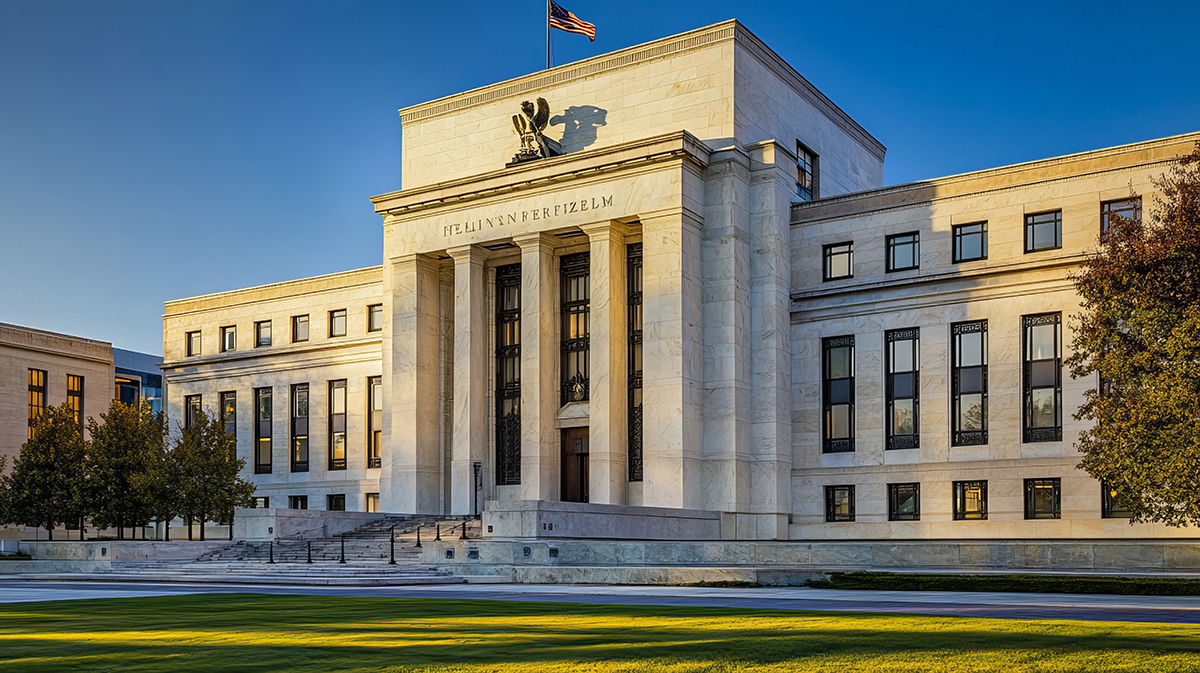
The Fed has very clearly shifted back toward fighting inflation, raising its benchmark rate by 25 basis points in its first rate increase since 2023. The decision reflects concerns that inflation remains too high for too long, despite signs of weakening employment. The Fed’s latest projections suggest the possibility of another rate increase this year. The September CPI report reinforces the case for maintaining restrictive monetary policy and raises the risk of another rate hike.
The Fed’s position highlights the challenges of addressing inflation, driven by higher energy costs, geopolitical tensions, tariffs, and persistent demand. Interest rate increases cannot directly resolve supply shortages or reduce oil prices. However, tighter monetary policy can restrain demand and help prevent temporary price increases from becoming entrenched. The key question is whether additional rate increases can meaningfully reduce inflation without weakening economic growth.
“The key question is whether additional rate increases can meaningfully reduce inflation without weakening economic growth."
Although the initial rate increase was largely anticipated, uncertainty surrounding Chairman Warsh’s broader commentary contributed to market volatility. Looking ahead, the key issue is whether the Fed follows through with another rate increase or holds rates steady while assessing the effects of its latest move. Persistent inflation and September’s stronger-than-expected CPI reading increase the risk of additional tightening, although weakening employment could argue for caution. Investors should prepare for continued volatility as markets balance the risks of prolonged inflation against the possibility that higher interest rates could slow economic growth and corporate earnings.

Stocks
US stocks remain near record highs, supported by strong corporate earnings and renewed enthusiasm for AI. However, underlying market participation has weakened considerably, raising concerns about the sustainability of the rally. While the largest technology companies continue to support the major indexes, a growing number of individual stocks are starting to struggle.
Federal Reserve policy and rising interest rates remain important risks for equities. Also, with inflation remaining elevated and the Fed signaling a renewed focus on price stability, the potential for additional rate increases could create near-term volatility. Higher Treasury yields could also pressure equity valuations, particularly among growth-oriented companies.
For the month of September, the US large-cap markets were generally flat, whereas small-cap and foreign markets declined. Year-to-date returns across all major US and foreign market indexes still appear strong, with most posting double-digit returns.
Looking ahead, the key question is whether market participation broadens beyond the largest technology companies or continues to deteriorate. Strong earnings and sustained AI investment could support further gains, while rising interest rates, elevated energy prices, and persistent inflation could challenge valuations.
Bonds
Treasury yields have climbed to multi-decade highs, creating renewed pressure across fixed-income markets and increasing borrowing costs throughout the economy. The 30-year Treasury yield reached its highest level since 2002, while the 10-year yield rose above 5.30%, approaching levels last seen in 2002. The 10-year yield increased more than half a percent in September, marking its largest monthly rise since September 2022 and contributing to one of the weakest months for Treasury bonds in recent years.
Persistent inflation and elevated energy prices are adding to the pressure on bonds. Rising oil prices have increased concerns that inflation could remain above the Fed’s 2% target for longer than expected, potentially requiring tighter monetary policy. Treasury prices move inversely to yields, meaning investors holding existing bonds face price declines as market interest rates rise.
The Fed remains a major driver of bond market volatility. Expectations for another rate increase have fluctuated significantly as investors respond to incoming inflation data. Also, persistent federal budget deficits require substantial government borrowing. Together, these forces could place upward pressure on Treasury yields even if inflation begins to moderate or the Fed eventually pauses rate increases.
Rising Treasury yields have important implications for the broader economy and financial markets. The 10-year yield serves as a key benchmark for mortgage rates, corporate borrowing costs, and equity valuations. On the other hand, higher yields may benefit investors seeking income from their investments, such as retirees.
© Advisory Alpha. Registration with the SEC or a state does not constitute an endorsement of the firm by regulators, nor does it indicate that the adviser has attained a particular level of skill or ability. This content is for informational purposes only and does not intend to make an offer or solicitation for the sale or purchase of any securities. Investing involves risk, including the potential loss of principal. No investment strategy, such as asset allocation or diversification, can guarantee a profit or protect against loss in periods of declining values. All investment strategies involve risk and have the potential for profit or loss. Changes in investment strategies, contributions or withdrawals, and economic conditions may materially affect the performance of your portfolio. There are no assurances that a portfolio will match or outperform any particular benchmark. Investors should carefully consider the investment objectives, risks, fees, and expenses before investing. Any financial services firms referenced in this material do not provide tax or legal advice. Please consult with your tax or legal professional regarding specific issues prior to making a tax or legal decision.
The performance information presented in the asset category section of this report is based on equal-weighted averages of the following Morningstar Categories: US Stocks (US Fund Large Blend, US Fund Mid-Cap Blend, US Fund Small-Blend), Foreign Stocks (US Fund Foreign Large Blend, US Fund Foreign Small/Mid Blend, US Fund Diversified Emerging Mkts), US Bonds (US Fund Intermediate Government, US Fund Inflation-Protected Bond, US Fund Corporate Bond, US Fund High Yield Bond, US Fund Bank Loan), Foreign Bonds (US Fund World Bond, US Fund Emerging Markets Bond), Hard Assets (US Fund Commodities Precious Metals, US Fund Commodities Energy, US Fund Global Real Estate, US Fund Real Estate), Hybrid Assets (US Fund Convertibles, US Fund Preferred Stock).
© 2026 Morningstar. All Rights Reserved. The information contained herein: (1) is proprietary to Morningstar and/or its content providers; (2) may not be copied or distributed; and (3) is not warranted to be accurate, complete, or timely. Neither Morningstar nor its content providers is responsible for any damages or losses arising from any use of this information. Past performance is no guarantee of future results. Morningstar category data is provided for illustrative purposes only to demonstrate a hypothetical investment vehicle represented by a group of similar investments. Morningstar category data is an aggregation across actual funds contained in the category, but it is not possible to directly invest in a category. Index returns are provided for illustrative purposes only to demonstrate a hypothetical investment vehicle using broad-based indices of securities. Unmanaged indexes are not available for direct investment. All data shown does not include internal fund expenses, trading costs, financial advisor fees, commissions, or taxes. This information is not intended to predict the performance of any specific investment or security. Past performance is no guarantee of future results.
Bureau of Labor Statistics. Unemployment Rate, Total Nonfarm Employment, Labor Force Participation, Consumer Price Index, Producers Price Index. www.bls.gov. United States, Department of Commerce, Bureau of Economic Analysis. Personal Consumption Expenditures, Gross Domestic Product, Consumer Spending, Personal Income, and Outlays. www.bea.gov. Federal Reserve. Fed Funds Rate, Fed Funds Target Range, Minutes of the Federal Open Market Committee, Board of the Federal Reserve System Calendar. www.federalreserve.gov. Trump, Donald. @realDonaldTrump. Truth Social.